

Pierre Jeanneret (1896 – 1967) was a Swiss architect and designer who long worked in the shadow of his cousin, Le Corbusier, before being recognised as a designer in his own right.
Born in Geneva, he studied architecture, painting and sculpture at the École des beaux-arts in his home town. He then cut his teeth in Paris with Auguste Perret, a pioneer of reinforced concrete. In 1922 he went into partnership with Le Corbusier and opened the studio at 35 rue de Sèvres with him. In other words, he took part in the adventure of modern architecture from the very beginning.
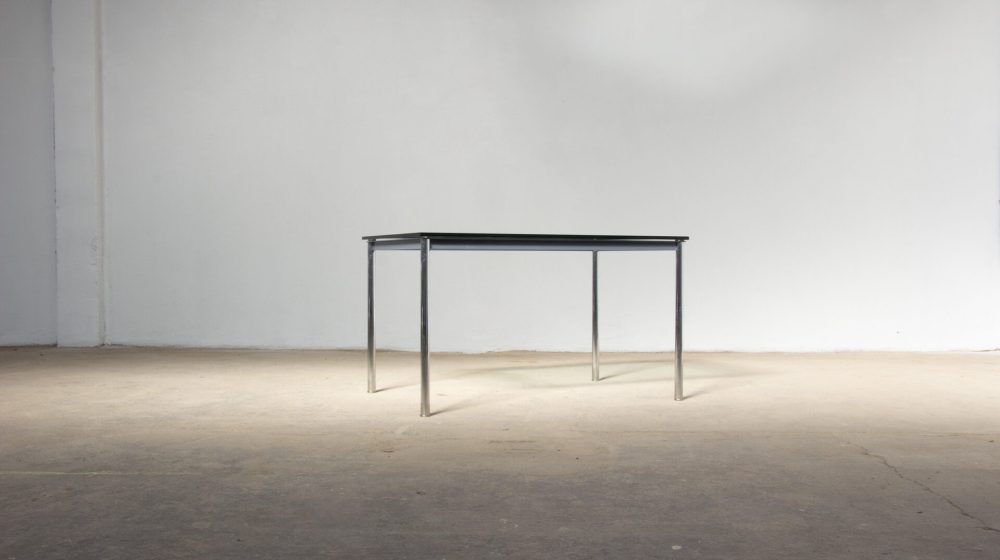
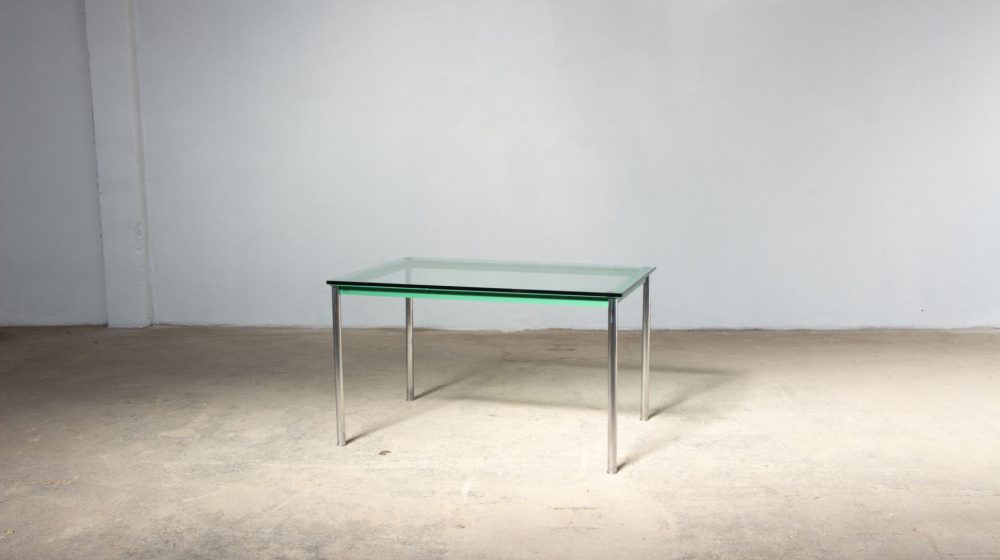
For nearly twenty years the two cousins jointly signed villas, apartment buildings and urban projects. From 1927, joined by Charlotte Perriand, they designed legendary furniture in chrome-plated steel tube: the reclining-back armchair, the LC2 and LC3 Grand Confort armchairs, the LC4 chaise longue and the LC6 and LC10 tables, now produced by Cassina.
During the war he worked notably with Jean Prouvé. Then, in 1951, he left for India for the great Chandigarh project, the new capital of Punjab. He stayed there for some fifteen years as chief architect, designing housing, schools and public buildings.
It was there that he created his most famous furniture. To equip the offices, the university, the Capitol and civil servants’ housing, he designed hundreds of models in teak and sissoo wood, fitted with woven cane, made on site by local craftsmen with simple means. The most iconic is the Office Chair, set on its famous inverted-V legs that recall the arms of a compass. Then came the Easy Chair with its generous armrests, the Kangaroo chair with its reclined profile, as well as benches, bookcases and reading tables. Long neglected, sometimes sold by weight as scrap wood, these pieces were rediscovered in the early 2000s and are now among the most sought after by collectors. Cassina has also reissued several of them since 2019.
What is touching about Pierre Jeanneret is this modesty combined with great precision, in the service of use and of the people who live with his work.
Choosing a piece by Pierre Jeanneret means bringing home a fragment of the history of modernity, between Paris and Chandigarh.