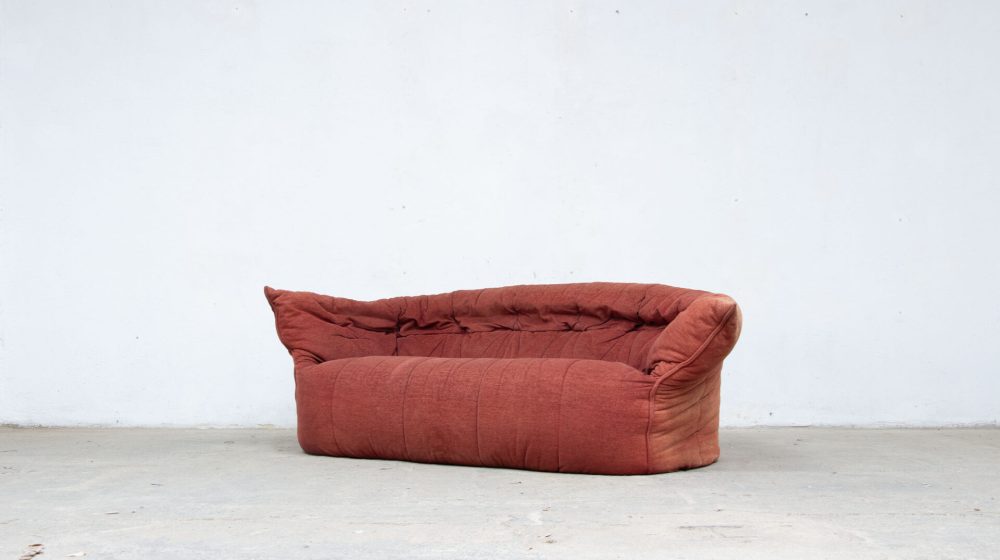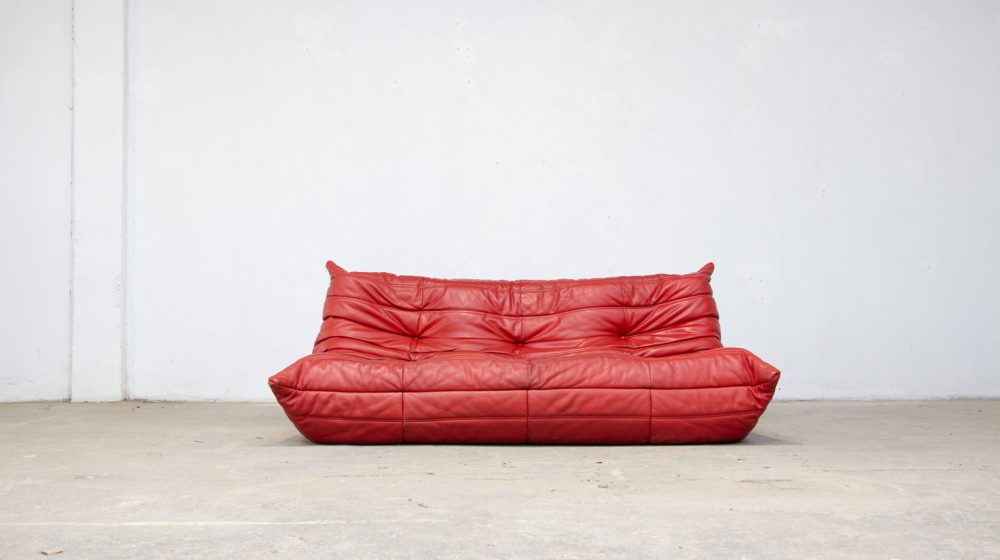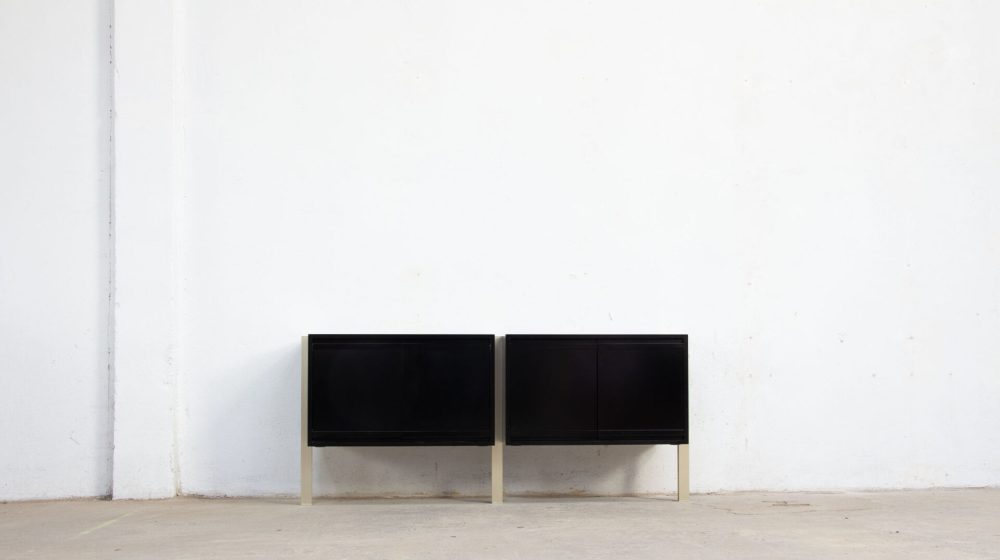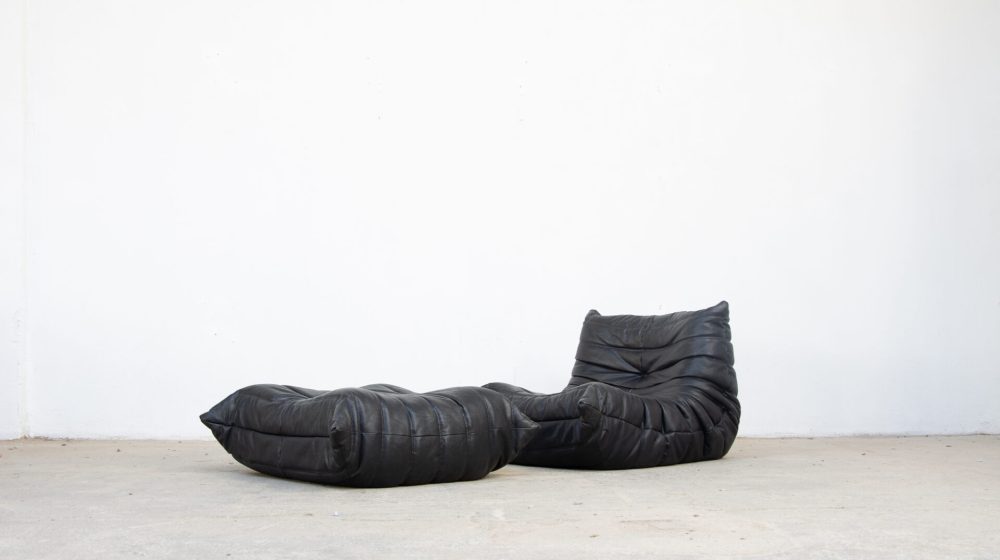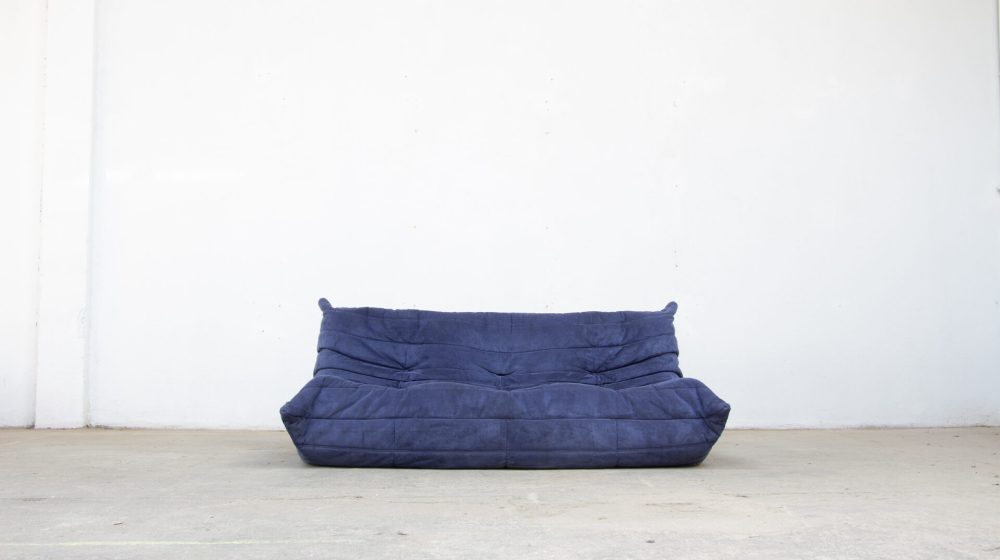


Michel Ducaroy (1925 – 2009) was a designer who invented a new way of sitting, or rather of flopping down.
His story begins in the family. Born in 1925, he grew up among furniture designers and makers whose work ranged from private interiors to major projects: ocean liners, exhibitions, official buildings. He trained at the École nationale des beaux-arts in Lyon, then in the family business, before striking out on his own as an independent designer in 1952. In other words, he knew furniture from the inside, from the workshop to the building site.
He first designed furniture for young people, seats and benches for public spaces, then met Jean Roset. This marked the beginning of a long collaboration with Ligne Roset, which would make him the company’s seating specialist.
Ducaroy experimented tirelessly with foams and new materials. The most spectacular result came in 1973, at the Salon des arts ménagers in Paris: the Togo. A seat with no frame, made entirely of foam, covered with a generously pleated cover, placed directly on the floor. No legs, no wood, no metal: just comfort. The Togo has since sold more than a million units in over fifty countries.
Alongside the Togo, he designed many other models for Ligne Roset: the enveloping Brigantin sofa, the Marsala armchairs, as well as Kashima, Koufra and Safi, not forgetting a few rarer storage pieces.
What makes Michel Ducaroy so relevant today is this simple idea: a seat should first welcome the body, invite it to relax, to sprawl, to live.
Choosing a piece by Michel Ducaroy means bringing home all the easygoing spirit of the 1970s, with a comfort that has not aged a day.