

Le Corbusier (1887 – 1965) was an architect, urban planner and designer who profoundly transformed the way we live.
Born Charles-Édouard Jeanneret in La Chaux-de-Fonds, Switzerland, he first trained at the art school of his home town, then travelled across Europe and worked with Auguste Perret in Paris and Peter Behrens in Berlin. Settled in Paris, he adopted the pseudonym Le Corbusier in 1920 in the magazine L’Esprit nouveau. In other words, he reinvented himself before reinventing architecture.
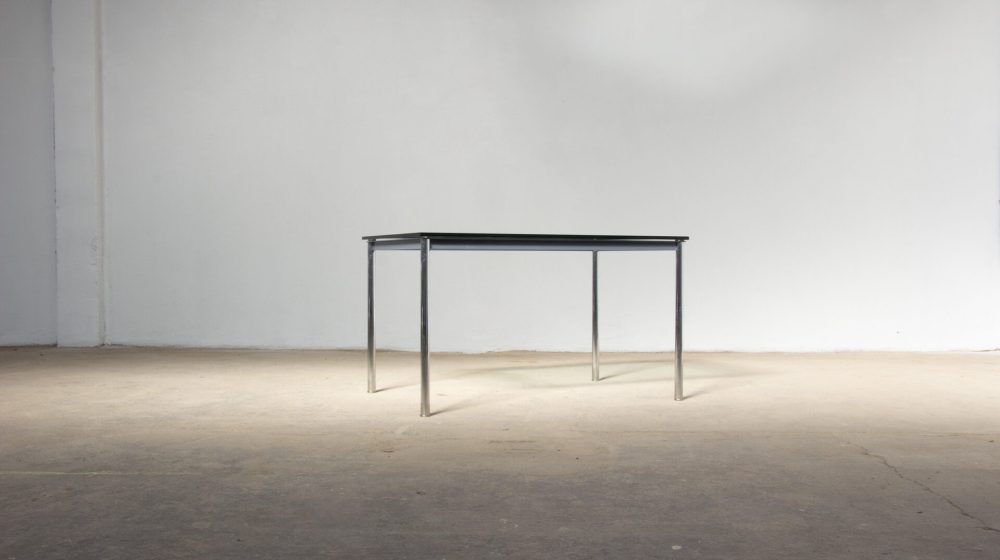
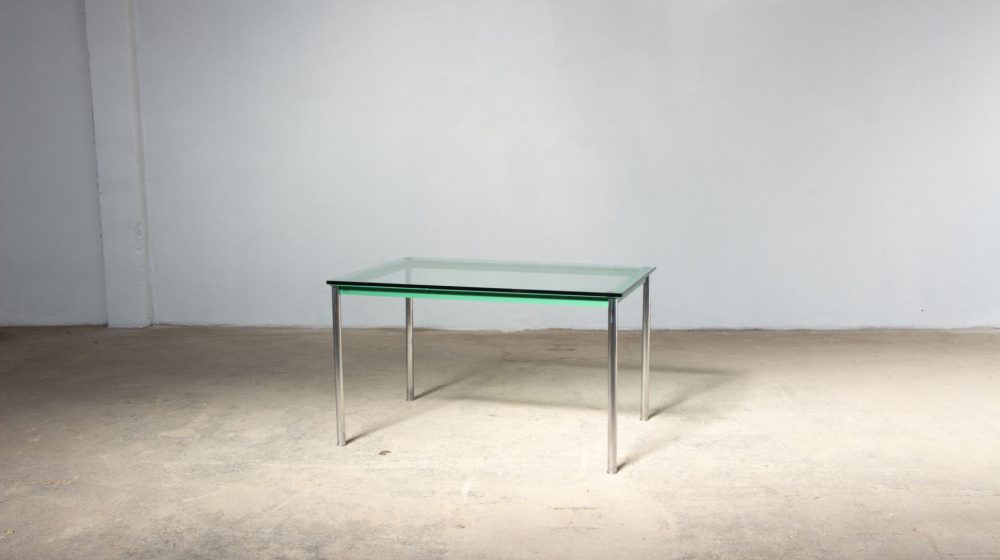
For him, the house should be a “machine for living in”, and furniture “equipment” serving the body. In 1927 he went into partnership with his cousin Pierre Jeanneret and the young Charlotte Perriand. Together they designed furniture in chrome-plated steel tube that marked the history of design: the LC1 reclining-back armchair, the LC2 and LC3 Grand Confort armchairs, the LC4 chaise longue and the LC6 table with its glass top on a steel frame. Presented at the 1929 Salon d’Automne, these models have been produced by Cassina since 1965.
At the same time, Le Corbusier designed the Villa Savoye in Poissy, the Cité radieuse in Marseille, the Ronchamp chapel and the city of Chandigarh in India. He also invented the Modulor, a system of proportions based on human measurements. In 2016, seventeen of his works were inscribed on the UNESCO World Heritage List.
What is fascinating about Le Corbusier is this absolute rigour placed in the service of comfort and light.
Choosing a piece by Le Corbusier means bringing home a manifesto of modernity, as relevant today as on the first day.